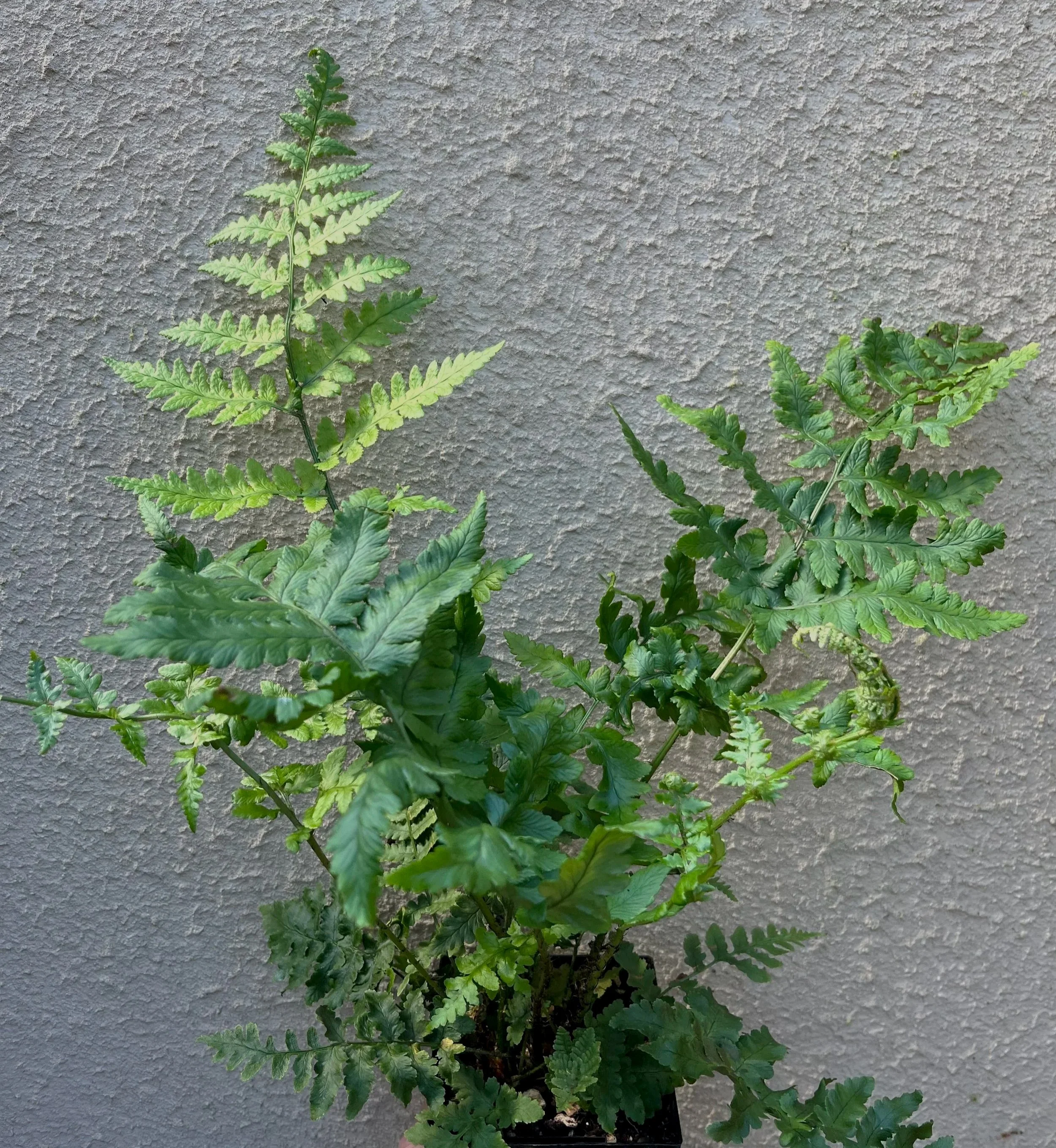
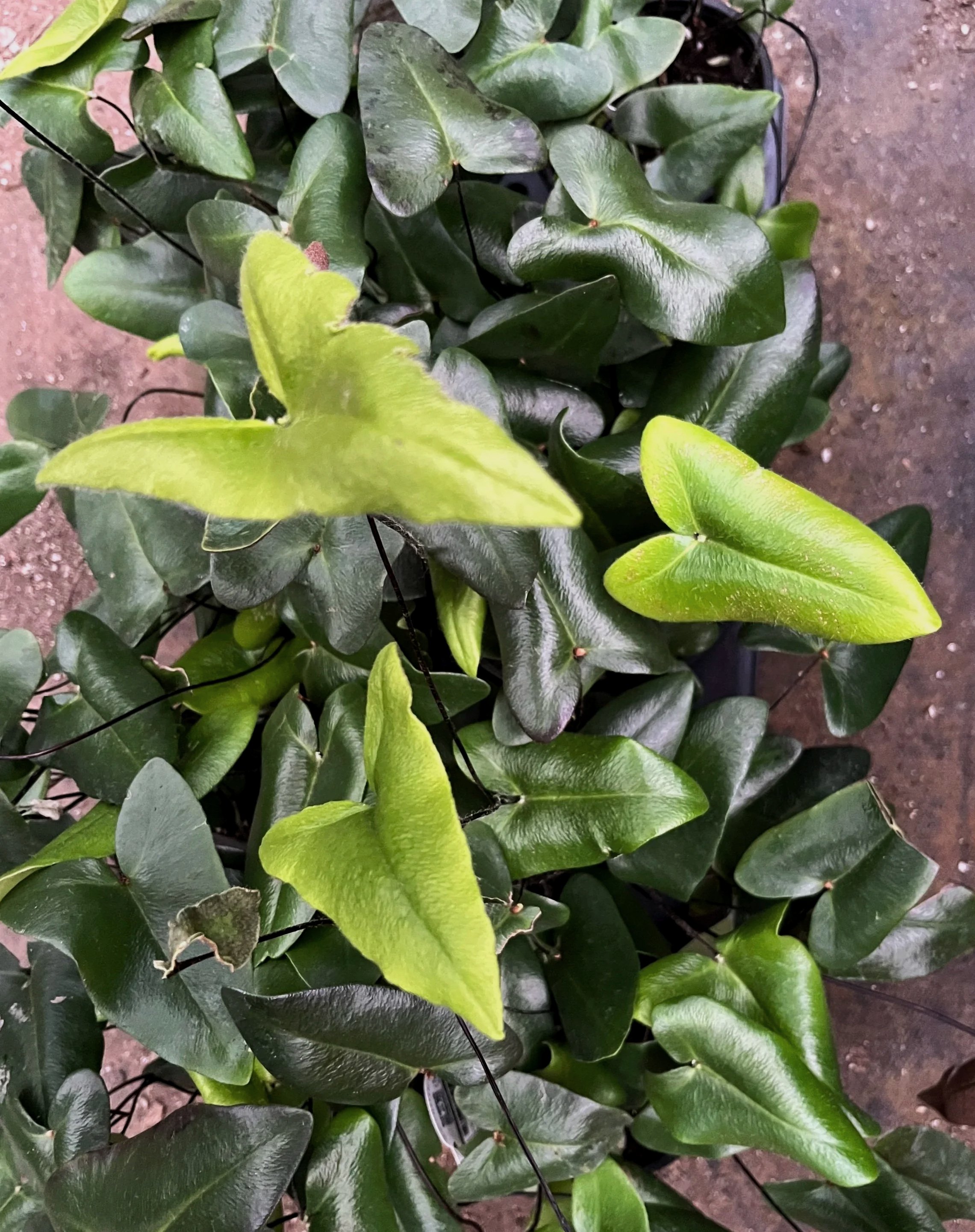
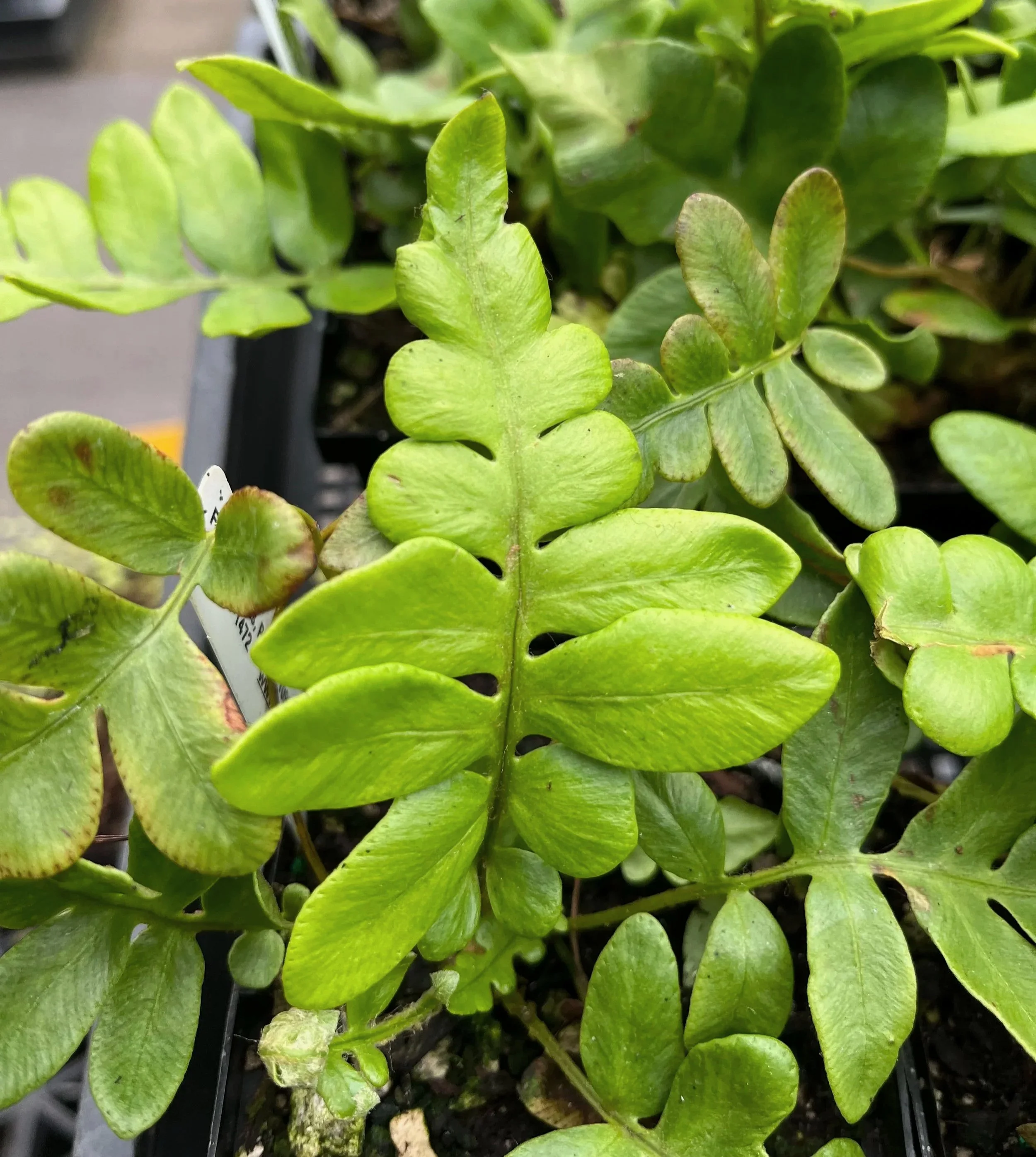
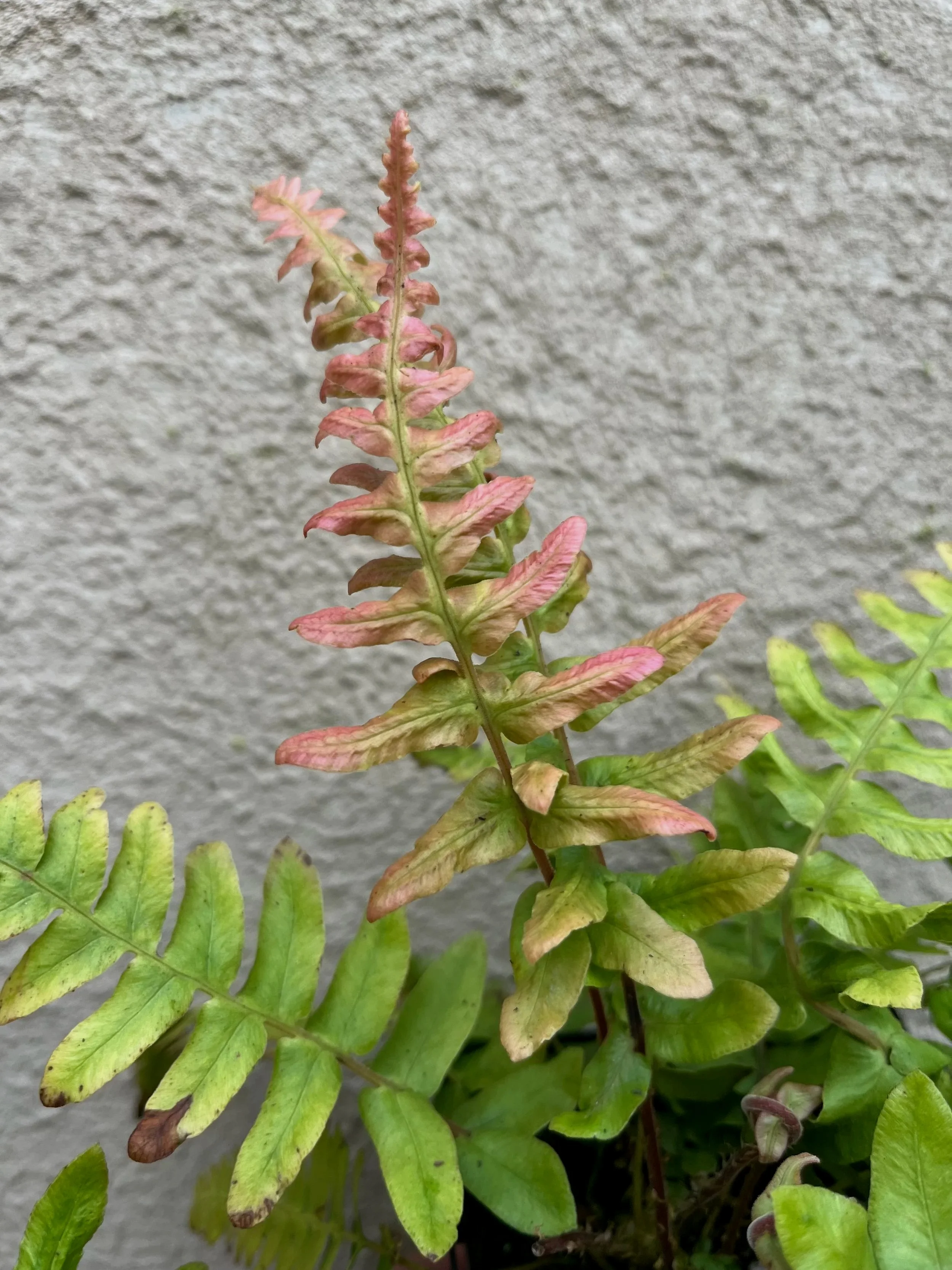
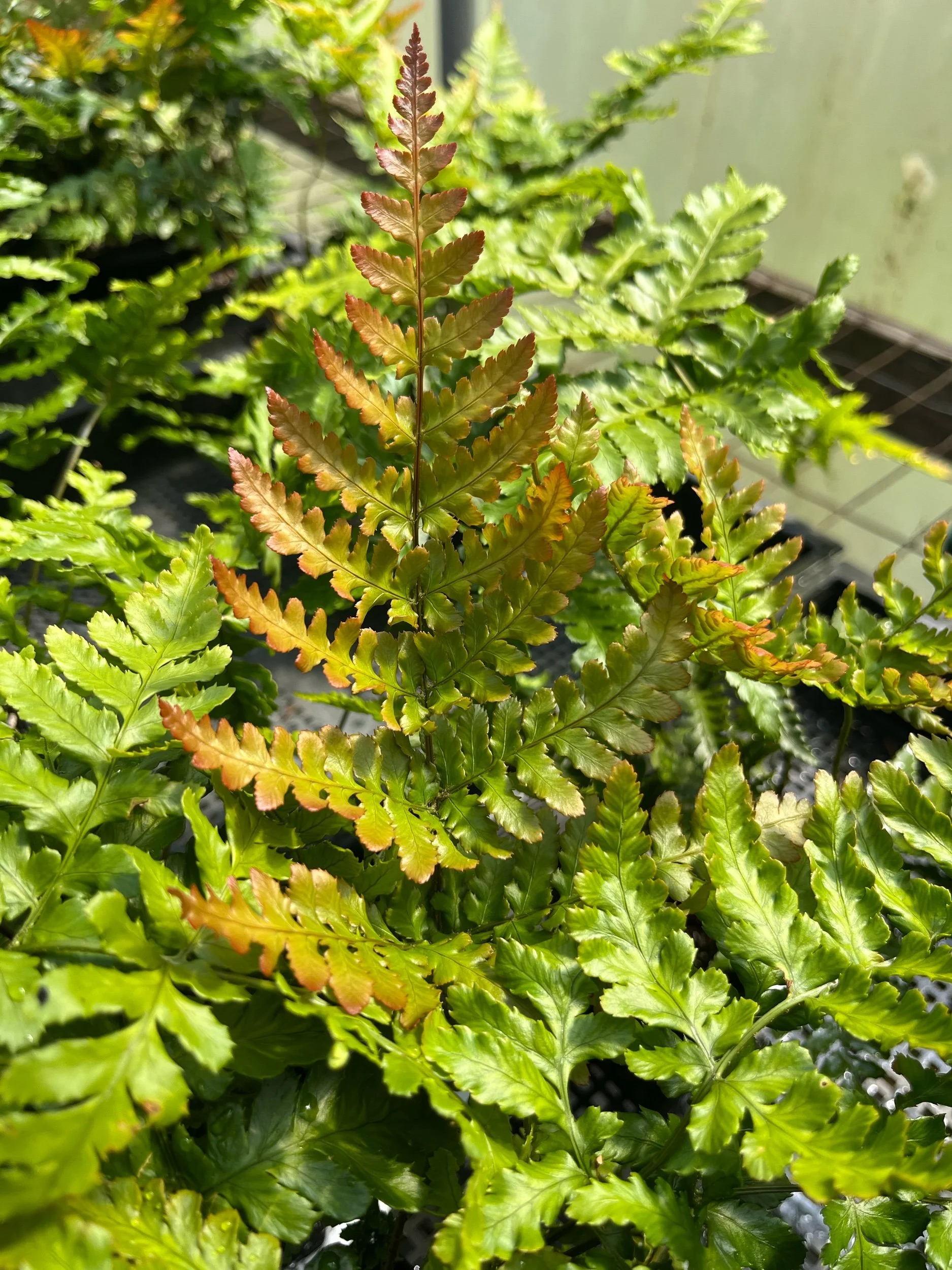
Hammock Fern (Blechnum occidentale)
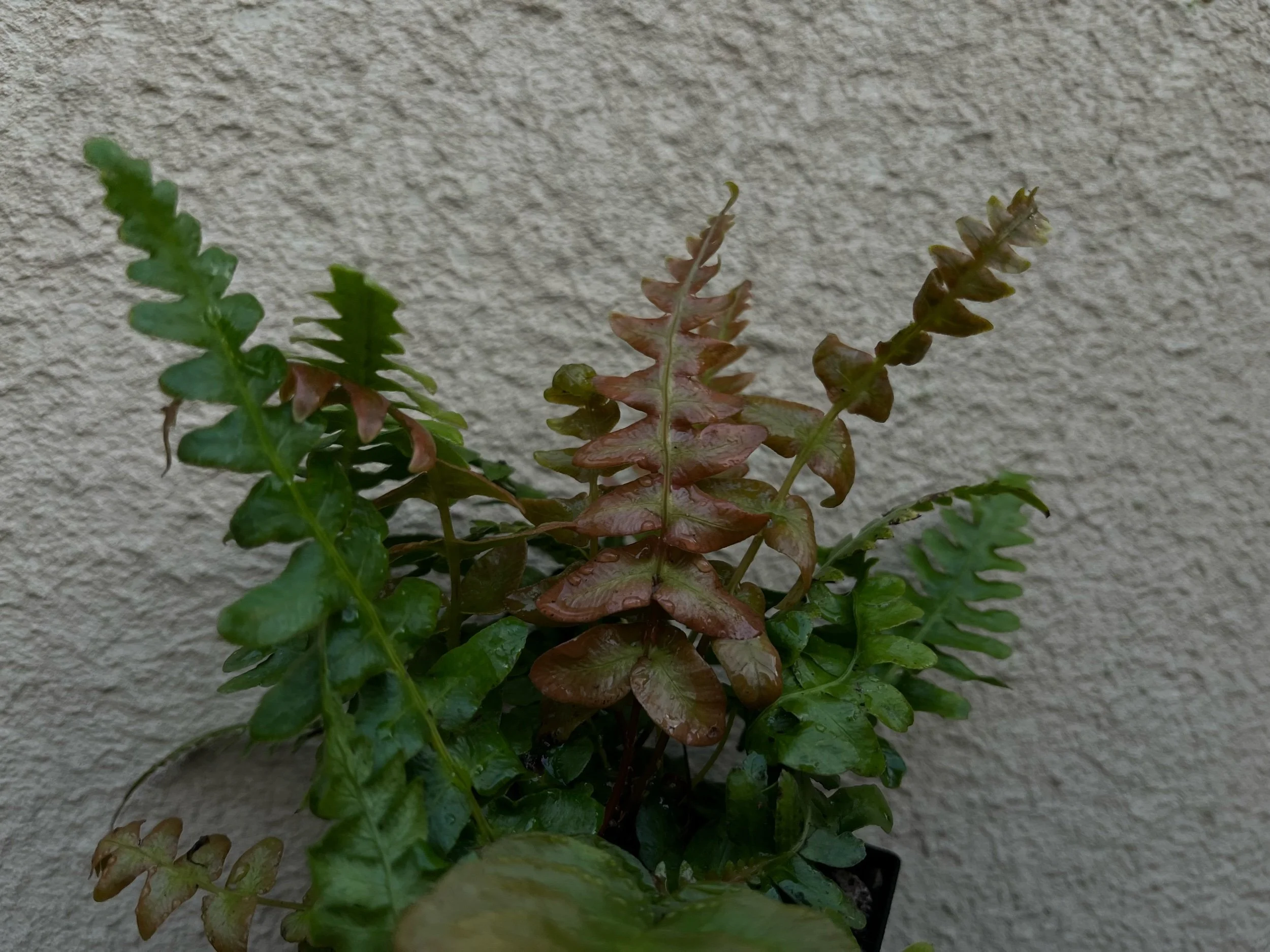
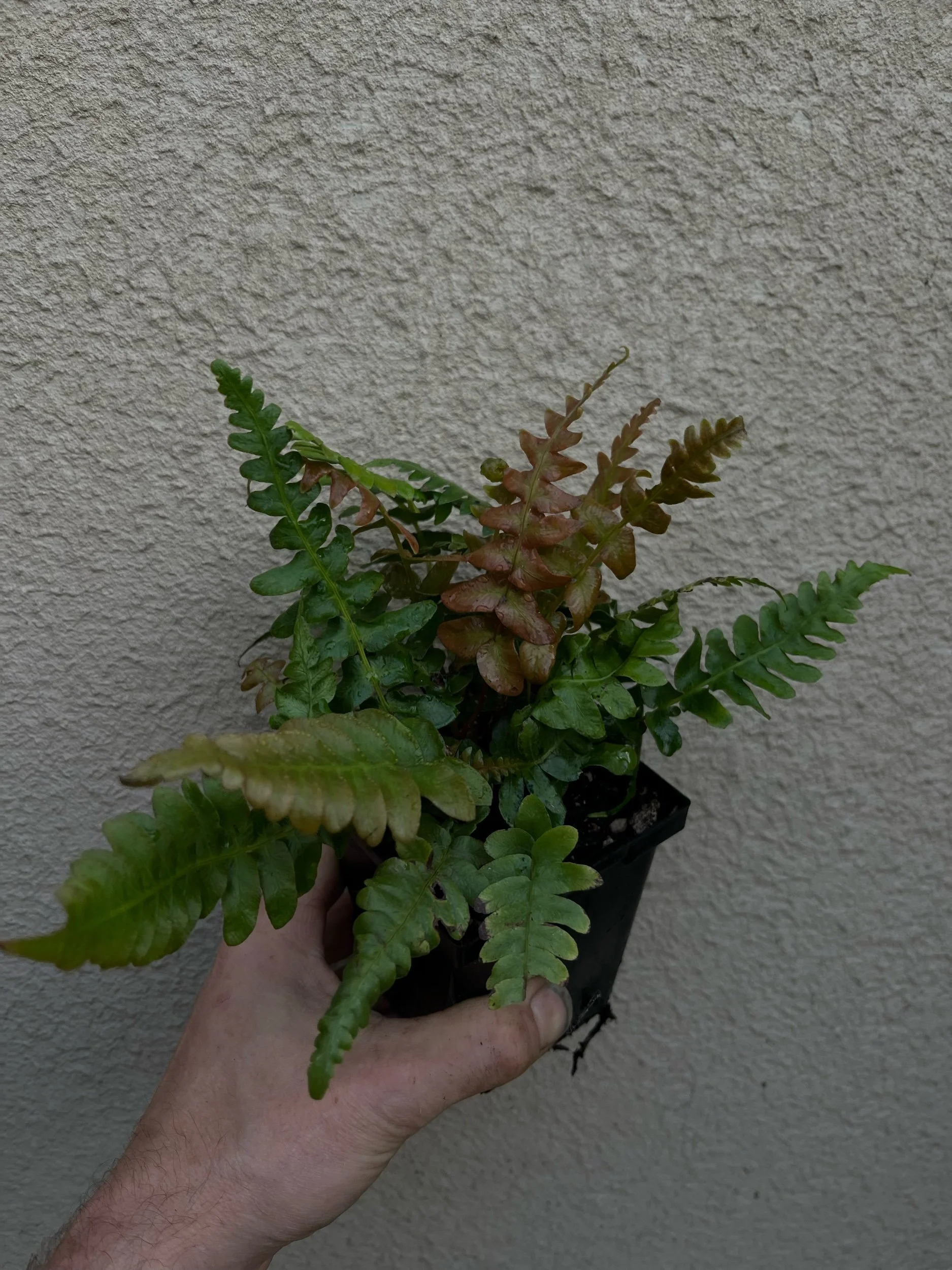
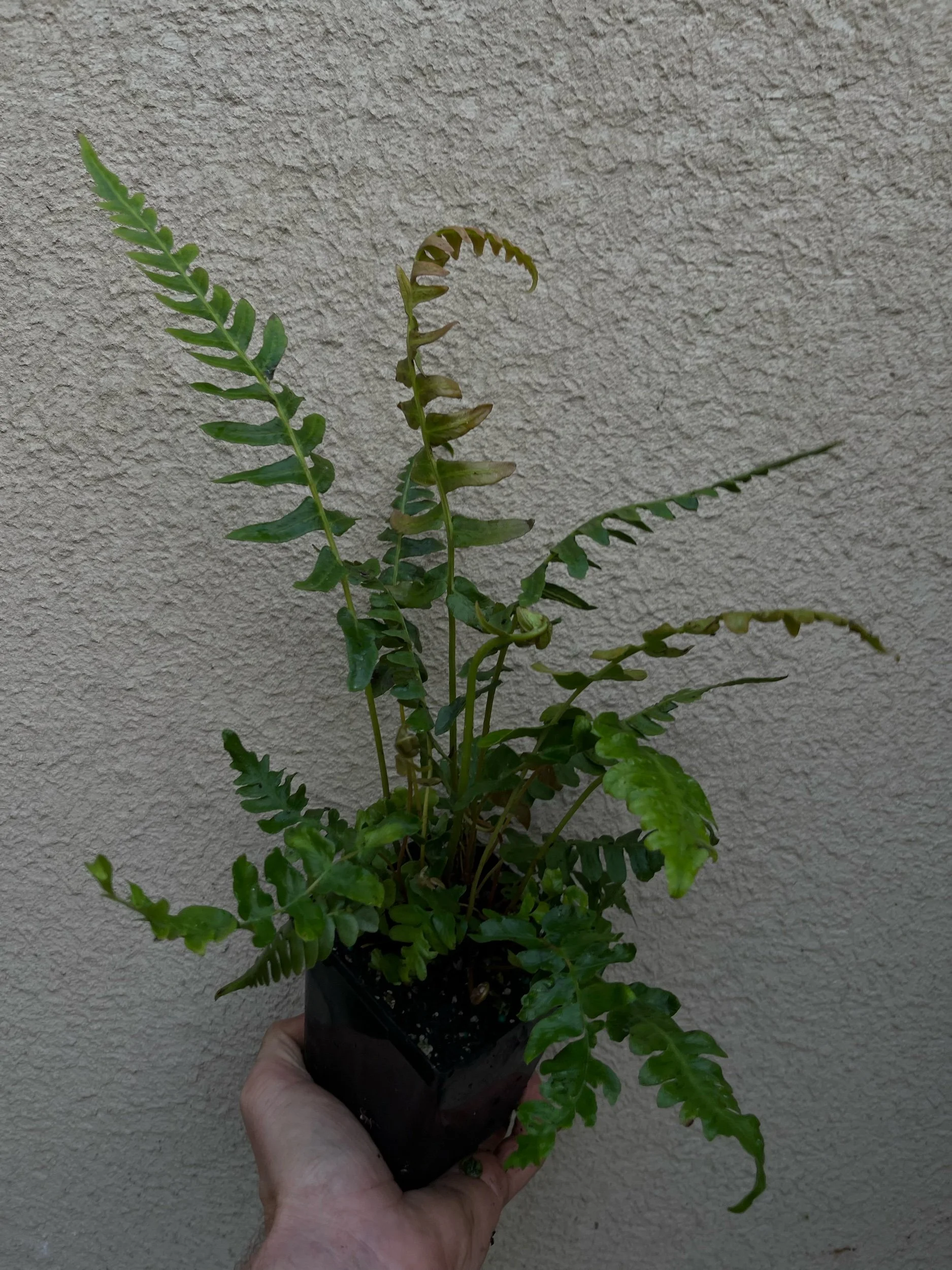
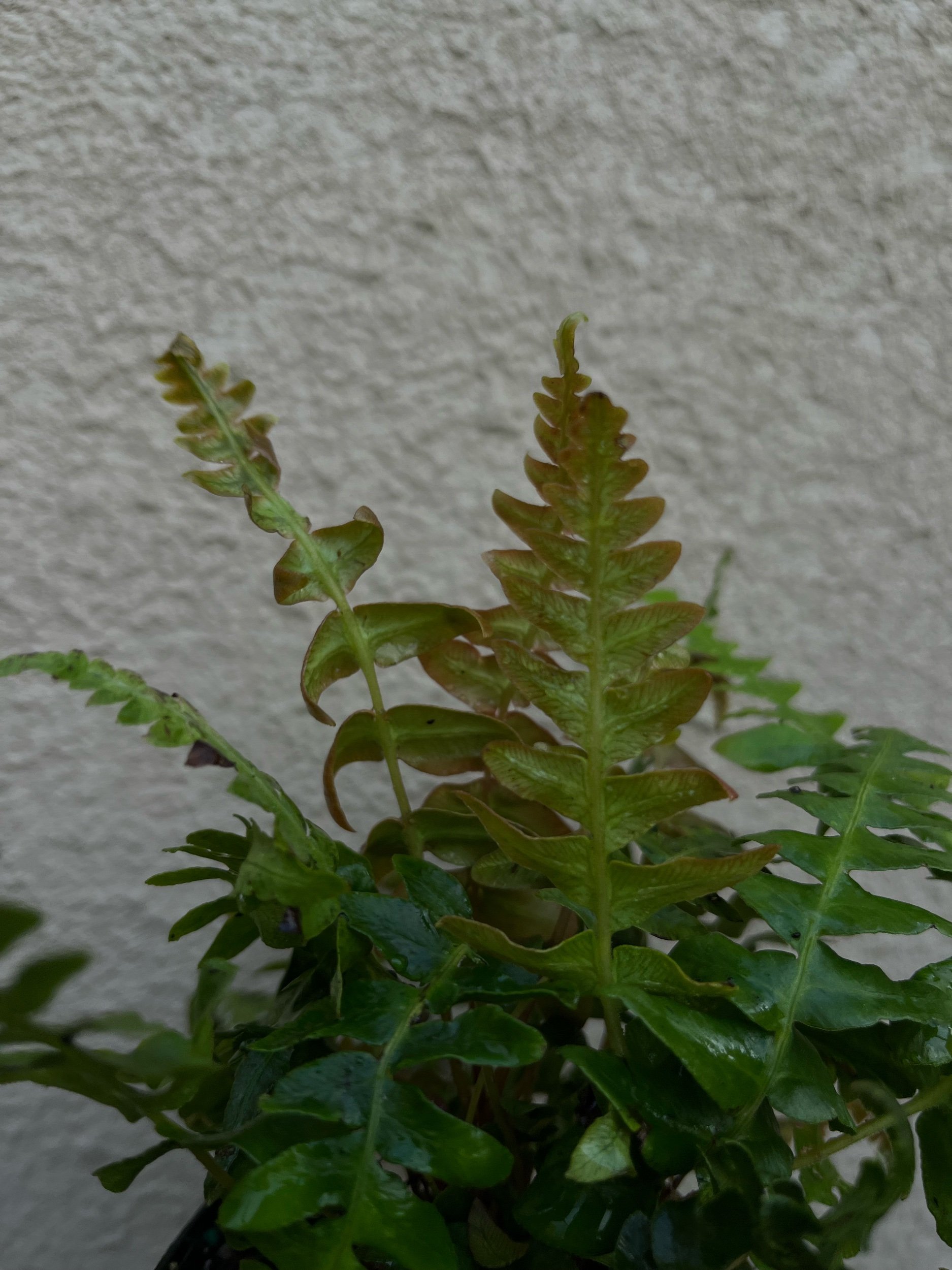
Hammock Fern (Blechnum occidentale)
May be sold as but is not the same as: Dwarf Hammock Fern (Blechnum appendiculatum). See notes below.
A graceful Blechnum with waxy, leathery fronds that emerge in red and pastel colors.
There are several ferns in the genus Blechnum that are referred to as “Hammock Ferns”, and although they look similar and often get mixed up in the trade, have distinct differences. Barbara Hoshizaki notes that most material sold commercially in the U.S. as B. appendiculatum has actually turned out to be B. occidentale. We decided to grow two species side by side for direct comparison, and quickly realized that the grower we received them from also had them flip-flopped and mixed up!
Blechnum appendiculatum (Dwarf Hammock Ferns) qualifies as a dwarf fern, reaching a mature size of 8”, rather than the 2’ that is characteristic of Blechnum occidentale (Hammock Fern). While they both have bright pink new growth that that fades through pastel orange and yellow colors as the fronds mature, B. appendiculatum has much softer, less glossy foliage with much tighter spacing between the pinnae and is much smaller, while B. occidentale has a waxy sheen and much more open frond structure, reaching a much larger size.
Frond Condition: Evergreen
Mature Size: 1-2’
Root Type: Slowly creeping rhizome that forms central rosettes
Reproduction: Monomorphic, producing spore on the abaxial margins of the frond; asexual via rhizome colonization
Origin: Central and South America
USDA Zones: 8, 9, 10